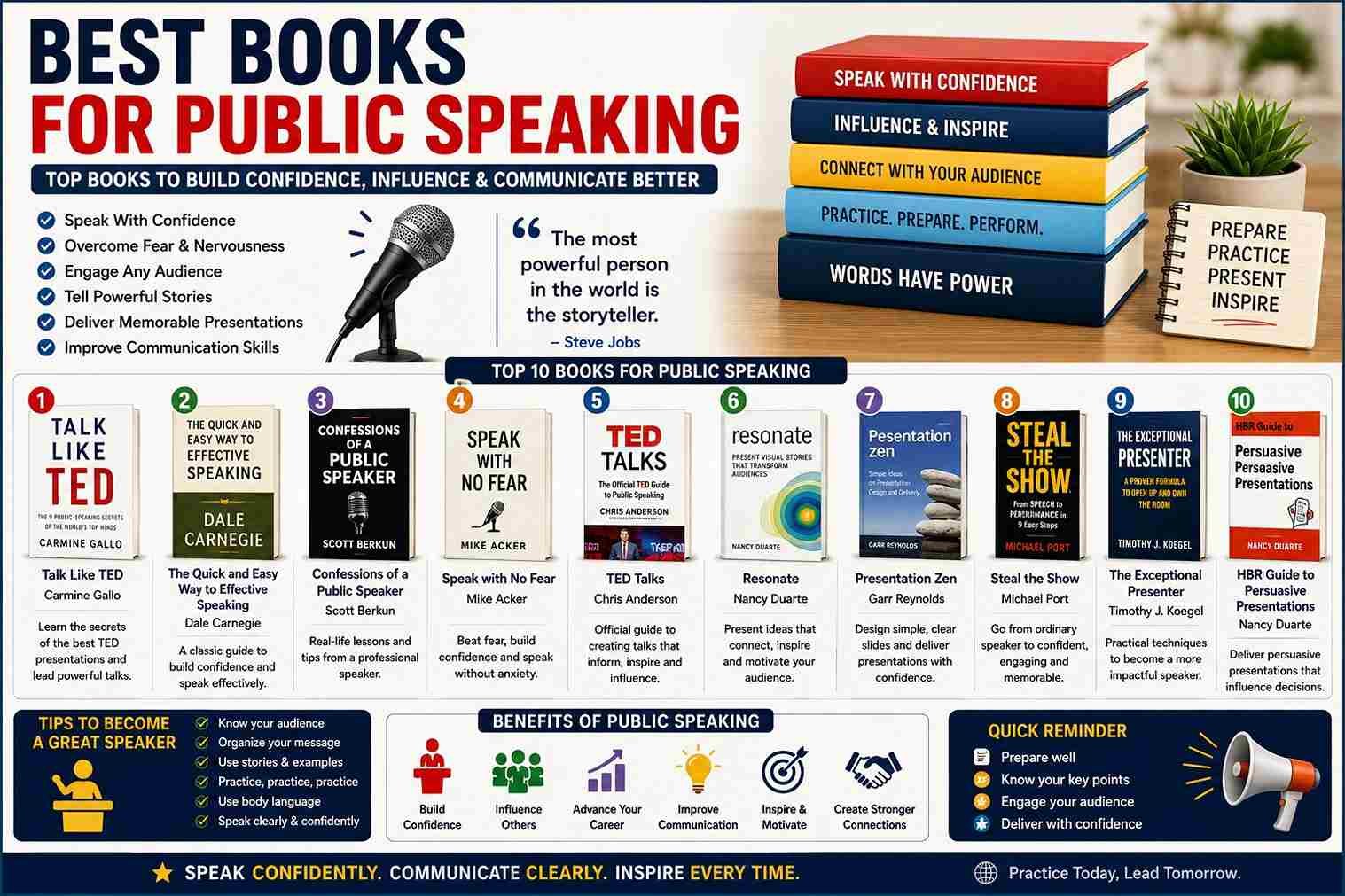
Best Books for Public Speaking: Top 20 Books to Build Confidence
Public speaking is one of the most valuable skills you can develop, whether you’re a student, teacher, business professional, entrepreneur, or job seeker. The ability to communicate ideas clearly and confidently can help you succeed in interviews, presentations, meetings, classrooms, and even everyday conversations.
The good news is that public speaking is a skill anyone can learn. While practice is essential, reading the best books for public speaking can help you understand proven techniques used by successful speakers, leaders, and communication experts.
The books in this guide on Emaratsmart.com cover everything from overcoming stage fright and building confidence to storytelling, persuasive speaking, audience engagement, and presentation design. Whether you’re preparing for your first speech or looking to become a more influential communicator, these recommendations will help you improve.
Quick Comparison of the Best Public Speaking Books
| Book | Author | Best For | Difficulty |
|---|---|---|---|
| Talk Like TED | Carmine Gallo | Presentations | Beginner |
| The Quick and Easy Way to Effective Speaking | Dale Carnegie | Beginners | Beginner |
| Confessions of a Public Speaker | Scott Berkun | Confidence | Beginner |
| Speak with No Fear | Mike Acker | Stage Fright | Beginner |
| Steal the Show | Michael Port | Professional Speaking | Intermediate |
| Resonate | Nancy Duarte | Storytelling | Intermediate |
| Presentation Zen | Garr Reynolds | Slide Design | Beginner |
| TED Talks | Chris Anderson | Speech Preparation | Beginner |
Quick Tip: Reading about public speaking is helpful, but improvement comes from practice. After each chapter, apply one technique in a conversation, meeting, or presentation.
Why Public Speaking Matters
Strong communication skills can open doors in both your personal and professional life.
Public speaking helps you:
- Speak with confidence
- Present ideas clearly
- Build leadership skills
- Influence others
- Perform better in interviews
- Improve classroom presentations
- Increase career opportunities
- Strengthen communication skills
Whether you’re speaking to one person or a large audience, these skills can make a lasting impact.
How Books Can Improve Your Public Speaking
Experienced speakers have spent years refining their techniques. By reading their books, you can learn proven strategies without relying only on trial and error.
These books teach you how to:
- Organize speeches
- Control nervousness
- Use body language effectively
- Tell engaging stories
- Capture audience attention
- Speak more clearly
- Answer questions confidently
- Deliver memorable presentations
Applying these techniques consistently will help you become a more confident speaker.
1. Talk Like TED – Carmine Gallo
This bestselling book analyzes some of the most successful TED Talks to explain what makes them engaging and memorable.
Why Read It?
- Learn storytelling techniques
- Improve presentation skills
- Capture audience attention
- Deliver memorable speeches
Best for: Students, professionals, business leaders, and presenters.
2. The Quick and Easy Way to Effective Speaking – Dale Carnegie
Written by one of the world’s most respected communication experts, this classic book teaches readers how to speak confidently in public.
Key Lessons
- Build confidence
- Organize speeches
- Reduce nervousness
- Connect with your audience
- Improve speaking habits
It’s one of the best books for beginners because of its practical advice and easy-to-follow techniques.
3. Confessions of a Public Speaker – Scott Berkun
Scott Berkun shares real-life experiences from his career as a professional speaker, explaining both his successes and mistakes.
Readers learn:
- How to manage stage fright
- What to do when presentations go wrong
- How to keep audiences engaged
- Practical speaking tips from real experience4. Speak with No Fear – Mike Acker
Many people avoid public speaking because they’re afraid of making mistakes. This book focuses on overcoming fear and building confidence.
You’ll learn how to:
- Reduce anxiety
- Speak naturally
- Build confidence
- Enjoy public speaking
5. TED Talks: The Official TED Guide to Public Speaking – Chris Anderson
Written by the head of TED, this book explains how to prepare talks that inspire, educate, and connect with audiences.
Topics include:
- Structuring a speech
- Storytelling
- Visual presentations
- Audience engagement
- Delivering ideas effectively
6. Resonate – Nancy Duarte
One of the most respected books on presentation design and storytelling, Resonate teaches you how to create presentations that inspire action and connect emotionally with your audience.
Why Read It?
- Build compelling presentations
- Use storytelling effectively
- Create emotional connections
- Keep audiences engaged
Best for: Business professionals, educators, and keynote speakers.
7. Presentation Zen – Garr Reynolds
This book focuses on creating simple, visually appealing presentations instead of overcrowded slides.
Key Lessons
- Design clean presentation slides
- Reduce unnecessary text
- Use visuals effectively
- Deliver presentations naturally
- Improve audience attention
It’s especially useful if you frequently use PowerPoint, Google Slides, or Canva presentations.
8. Steal the Show – Michael Port
Michael Port explains how professional performers use storytelling, confidence, and preparation to deliver memorable presentations.
You’ll Learn
- Stage presence
- Audience interaction
- Professional speaking techniques
- Presentation preparation
- Voice control
This book is ideal for entrepreneurs, trainers, coaches, and business professionals.
9. The Exceptional Presenter – Timothy J. Koegel
This practical guide teaches readers how to become more engaging speakers by improving delivery, body language, and audience interaction.
Benefits
- Improve confidence
- Master body language
- Speak naturally
- Keep presentations engaging
- Handle audience questions effectively
10. HBR Guide to Persuasive Presentations – Nancy Duarte
Published by Harvard Business Review, this book teaches professionals how to create presentations that influence decisions and persuade audiences.
Topics include:
- Organizing ideas
- Delivering persuasive messages
- Handling objections
- Using visuals effectively
- Building credibility
How to Choose the Right Public Speaking Book
Different books solve different communication challenges.
| Your Goal | Recommended Book |
|---|---|
| Build Confidence | Speak with No Fear |
| Learn Storytelling | Talk Like TED |
| Reduce Stage Fright | Confessions of a Public Speaker |
| Improve Slide Design | Presentation Zen |
| Professional Speaking | Steal the Show |
| Persuasive Presentations | HBR Guide to Persuasive Presentations |
| Better Speech Structure | TED Talks |
| Beginner-Friendly | Dale Carnegie’s Effective Speaking |
Practical Tips to Become a Better Public Speaker
Reading is important, but practice creates real improvement.
Follow these practical tips:
- Practice speaking every day.
- Record yourself and watch the playback.
- Focus on speaking clearly instead of speaking quickly.
- Maintain eye contact with your audience.
- Use pauses to emphasize important points.
- Avoid filler words like “um” and “uh.”
- Prepare thoroughly before every presentation.
- Ask trusted friends or colleagues for feedback.
- Join speaking groups or presentation clubs.
- Learn from experienced speakers by watching high-quality presentations.
Common Public Speaking Mistakes
Many beginners make similar mistakes.
Avoid these habits:
- Reading directly from slides.
- Speaking too quickly.
- Using too much text in presentations.
- Avoiding eye contact.
- Forgetting to practice.
- Memorizing every word instead of understanding the message.
- Ignoring audience engagement.
- Using complicated language when simple words work better.
Remember, audiences appreciate clarity and authenticity more than perfection.
Benefits of Reading Public Speaking Books
These books can help you:
- Build confidence.
- Improve communication skills.
- Deliver engaging presentations.
- Reduce speaking anxiety.
- Become a stronger leader.
- Improve interview performance.
- Strengthen storytelling abilities.
- Influence and persuade more effectively.
- Advance your career.
- Become a more confident communicator in everyday life.
Safety Note
Public speaking is a skill that improves with consistent practice. If you feel nervous before speaking, remember that it’s a common experience. Prepare well, practice regularly, and focus on sharing useful information with your audience rather than trying to deliver a perfect speech.
Official Resources
For trusted advice, speech techniques, and communication resources, explore these official websites:
- TED: https://www.ted.com/
- Toastmasters International: https://www.toastmasters.org/
- National Speakers Association: https://www.nsaspeaker.org/
Recommended External Link: If you’re adding only one outbound link for SEO, use https://www.toastmasters.org/ because it’s one of the world’s most recognized organizations for developing public speaking and leadership skills.
Frequently Asked Questions
What is the best book for public speaking?
Some of the most recommended public speaking books include:
- Talk Like TED by Carmine Gallo
- The Quick and Easy Way to Effective Speaking by Dale Carnegie
- Speak with No Fear by Mike Acker
- Confessions of a Public Speaker by Scott Berkun
- Presentation Zen by Garr Reynolds
Each book focuses on different aspects of public speaking, from overcoming fear to creating engaging presentations.
Which public speaking book is best for beginners?
The Quick and Easy Way to Effective Speaking by Dale Carnegie and Speak with No Fear by Mike Acker are excellent starting points. They use simple language and provide practical exercises for building confidence.
Can books really improve public speaking?
Yes. Books teach speech structure, storytelling, audience engagement, body language, and confidence-building techniques. However, combining reading with regular speaking practice produces the best results.
How can I overcome stage fright?
You can reduce speaking anxiety by:
- Practicing regularly
- Preparing thoroughly
- Taking slow, deep breaths
- Focusing on your message instead of yourself
- Speaking to small groups before larger audiences
- Recording and reviewing your practice sessions
How often should I practice public speaking?
Aim to practice for 15 to 30 minutes several times a week. Even short practice sessions can significantly improve your confidence and delivery over time.
Which book is best for presentation skills?
Presentation Zen by Garr Reynolds and Resonate by Nancy Duarte are highly recommended for creating clear, engaging presentations with effective visual design.
Are these books useful for students?
Absolutely. Students can use these books to improve classroom presentations, debates, interviews, and communication skills that will benefit them throughout their education and careers.
Can public speaking skills help in job interviews?
Yes. Strong public speaking skills improve confidence, clarity, and professionalism during interviews, meetings, and workplace presentations, making them valuable for career growth.
Conclusion
Reading the best books for public speaking is an excellent way to become a more confident and effective communicator. These books provide practical advice on overcoming stage fright, organizing speeches, engaging audiences, using storytelling, and delivering memorable presentations.
Whether you’re preparing for school presentations, business meetings, interviews, or keynote speeches, the right resources can help you communicate with greater confidence and impact. Choose one book that matches your current goal, apply its techniques through consistent practice, and continue building your skills over time.
Remember that every great speaker started as a beginner. Confidence comes through preparation, experience, and a willingness to learn from each speaking opportunity.
For more expert book recommendations, communication guides, education resources, and self-improvement articles, keep visiting EmaratSmart.com.