Best Books for Beginners Reading
Starting a reading habit can feel overwhelming, especially if you’re unsure which book to pick first. Many beginners choose books that are too long or difficult, making it harder to stay motivated. The good news is that the right book can make reading enjoyable, build confidence, and encourage you to keep turning the pages.
The best books for beginners reading are easy to understand, engaging, and written in a way that keeps readers interested from beginning to end. Whether you enjoy inspiring stories, personal development, fiction, biographies, or timeless classics, there are beginner-friendly books that match your interests and reading level.
In this guide on Emaratsmart.com, you’ll discover some of the best books for beginners, learn how to choose your first book, and find practical tips for building a lifelong reading habit.
Quick Facts About Beginner Books
| Feature | Details |
|---|---|
| Best For | New readers and adults starting a reading habit |
| Reading Level | Easy to Moderate |
| Recommended Reading Time | 15–30 minutes daily |
| Best Formats | Paperback, eBook, Audiobook |
| Popular Categories | Fiction, Self-Help, Biography, Classics, Business |
| Beginner Goal | One book per month |
| Main Benefit | Builds confidence and improves reading skills |
Quick Tip: Choose a book that genuinely interests you. A book you’ll enjoy is far more likely to help you build a lasting reading habit than one you feel you “should” read.
How to Choose Your First Book
Before buying or borrowing a book, think about what you enjoy learning or talking about.
Ask yourself:
- Do I enjoy true stories?
- Am I interested in personal growth?
- Do I like mystery or adventure?
- Would I rather learn a new skill?
- Do I want a short book or a longer one?
Your first book doesn’t have to be famous—it just needs to keep you interested.
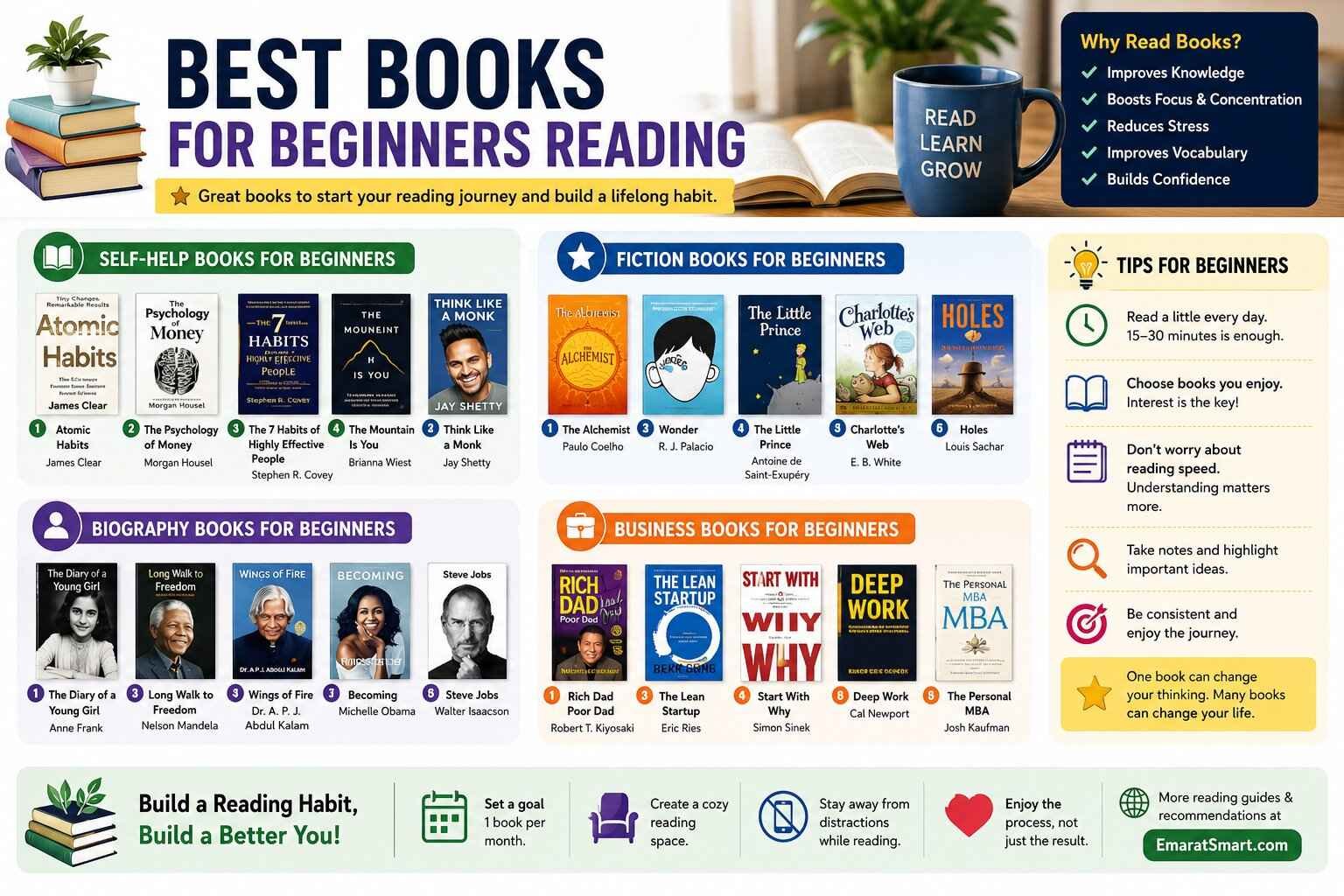
Best Self-Help Books for Beginners
These books are easy to read and full of practical advice.
1. Atomic Habits — James Clear
One of the best books for beginners interested in building better habits. It explains how small daily improvements can lead to big results.
Why beginners like it:
- Simple language
- Practical examples
- Easy-to-follow advice
- Motivating chapters
2. The Psychology of Money — Morgan Housel
A beginner-friendly book that explains how people think about money, wealth, and financial decisions.
You’ll learn:
- Better financial habits
- Long-term thinking
- Common money mistakes
3. The 7 Habits of Highly Effective People — Stephen R. Covey
A classic personal development book that teaches principles for becoming more productive and effective in everyday life.
4. The Mountain Is You — Brianna Wiest
A thoughtful book about overcoming self-doubt, building resilience, and creating positive personal change.
5. Think Like a Monk — Jay Shetty
This book combines practical advice with lessons on mindfulness, purpose, and personal growth in an easy-to-understand style.
Best Fiction Books for Beginners
If you enjoy stories, these novels are engaging without being overly complex.
1. The Alchemist — Paulo Coelho
A short and inspiring novel about following your dreams and discovering your purpose.
2. Wonder — R. J. Palacio
A heartwarming story about kindness, courage, and acceptance that appeals to readers of many ages.
3. The Little Prince — Antoine de Saint-Exupéry
A timeless classic with simple language and meaningful life lessons.
4. Charlotte’s Web — E. B. White
A beautifully written story that is enjoyable for both young readers and adults beginning their reading journey.
5. Holes — Louis Sachar
A fast-paced novel with mystery, humor, and memorable characters that keeps readers engaged.
Best Biography Books for Beginners
Biographies can inspire you by sharing the real-life experiences of successful people.
1. The Diary of a Young Girl — Anne Frank
This powerful memoir offers a personal perspective on courage, hope, and resilience during difficult times.
2. Long Walk to Freedom — Nelson Mandela
An inspiring autobiography that tells the story of Nelson Mandela’s journey from imprisonment to becoming South Africa’s first Black president.
3. Wings of Fire — Dr. A. P. J. Abdul Kalam
One of the most recommended books for beginners, this autobiography shares valuable lessons about hard work, education, and perseverance.
4. Becoming — Michelle Obama
A bestselling memoir that explores leadership, family, and personal growth in an engaging and accessible style.
5. Steve Jobs — Walter Isaacson
A fascinating biography that explores innovation, leadership, and the life of Apple co-founder Steve Jobs.
Best Business Books for Beginners
If you’re interested in entrepreneurship, leadership, or financial success, these books are excellent starting points.
1. Rich Dad Poor Dad — Robert T. Kiyosaki
Learn fundamental concepts about money, investing, and financial education.
2. The Lean Startup — Eric Ries
A practical guide for entrepreneurs looking to build successful businesses through continuous improvement.
3. Start With Why — Simon Sinek
Discover how successful leaders inspire people by understanding and communicating their purpose.
4. Deep Work — Cal Newport
Learn how focused work can improve productivity and help you achieve meaningful goals.
5. The Personal MBA — Josh Kaufman
A beginner-friendly introduction to essential business concepts without attending business school.
Best Classic Books for Beginners
Classics don’t have to be difficult. These titles are accessible and enjoyable for new readers.
- Animal Farm — George Orwell
- The Old Man and the Sea — Ernest Hemingway
- Treasure Island — Robert Louis Stevenson
- A Christmas Carol — Charles Dickens
- The Adventures of Tom Sawyer — Mark Twain
These books are relatively short and continue to be widely recommended because of their memorable stories and themes.
Why These Books Are Great for Beginners
These recommendations share several qualities that make them ideal for new readers:
- Clear and engaging writing
- Interesting stories or practical lessons
- Moderate length
- Easy-to-follow chapters
- Valuable insights
- Suitable for different reading interests
Choosing a book that matches your interests will make it easier to stay motivated and finish it.
Tips for Reading Your First Book
If you’re new to reading, these simple strategies can help:
- Read 15–20 minutes every day.
- Keep your book nearby.
- Choose a quiet place to read.
- Avoid checking your phone while reading.
- Don’t worry about reading quickly.
- Highlight meaningful quotes.
- Take short notes if helpful.
- Finish one book before starting another.
Small, consistent reading sessions are often more effective than trying to read for several hours at once.
Common Mistakes Beginners Make
Many new readers face similar challenges.
Avoid these common mistakes:
- Choosing books that are too difficult
- Setting unrealistic reading goals
- Comparing your reading speed to others
- Reading only because a book is popular
- Giving up after missing a few days
- Trying to read too many books at the same time
Remember, reading is a personal journey. Focus on enjoying the process rather than rushing to finish books.
How Many Books Should Beginners Read?
There is no perfect number.
A realistic goal for beginners is:
- 1 book per month, or
- 10–20 pages each day
As your confidence grows, you can gradually increase your reading time and explore different genres.
Safety Note
Reading should be enjoyable and sustainable. Choose age-appropriate books, take regular breaks to reduce eye strain, and avoid forcing yourself to finish books you don’t enjoy. Building a reading habit takes time, so focus on consistency rather than speed.
Official Resources
If you’re looking for more reading recommendations and information about books, these trusted resources are worth exploring:
Goodreads: https://www.goodreads.com/
Open Library: https://openlibrary.org/
These websites help readers discover books, read reviews, create reading lists, and find titles based on their interests.
Frequently Asked Questions
What are the best books for beginners reading?
Some of the best beginner-friendly books include:
- Atomic Habits by James Clear
- The Alchemist by Paulo Coelho
- The Psychology of Money by Morgan Housel
- Wonder by R. J. Palacio
- The Little Prince by Antoine de Saint-Exupéry
- Rich Dad Poor Dad by Robert T. Kiyosaki
- Animal Farm by George Orwell
- The Diary of a Young Girl by Anne Frank
These books are known for their engaging writing and accessible language.
Which book should I read first as a beginner?
Choose a book that matches your interests. If you enjoy personal development, Atomic Habits is a great place to start. If you prefer fiction, The Alchemist or Wonder are excellent beginner-friendly choices.
How many pages should beginners read each day?
A realistic goal is 10 to 20 pages or 15 to 30 minutes of reading each day. Consistency is more important than reading for long periods.
Is it okay to stop reading a book I don’t enjoy?
Yes. If you’ve given a book a fair chance and it doesn’t interest you, it’s perfectly fine to choose another one. Enjoying the reading experience helps you build a lasting habit.
Should beginners read fiction or non-fiction?
Both are good options. Fiction improves imagination and comprehension, while non-fiction helps you learn new skills and knowledge. Choose the type that interests you the most.
Are audiobooks good for beginners?
Yes. Audiobooks are an excellent way to enjoy books while commuting, exercising, or doing household tasks. They can also complement your regular reading.
How long does it take to build a reading habit?
Everyone is different, but reading consistently for a few weeks can help establish a routine. The key is to make reading a regular part of your day.
Where can I find free books to read?
You can explore free and legally available books through libraries and trusted online platforms such as Open Library and Project Gutenberg, which offer thousands of public-domain titles.
Conclusion
Choosing the best books for beginners reading is the first step toward building a lifelong reading habit. Whether you prefer self-help, fiction, biographies, business, or classic literature, starting with books that match your interests will make reading more enjoyable and rewarding.
Remember that you don’t need to read dozens of books each year to benefit. Reading for just 15 to 30 minutes a day can improve your vocabulary, strengthen your focus, expand your knowledge, and boost your confidence over time.
Start with one book, stay consistent, and enjoy the journey. Every page you read brings new ideas, valuable lessons, and opportunities for personal growth.
For more expert reading guides, book recommendations, education resources, and self-improvement tips, keep visiting EmaratSmart.com.