Best Books for Stress Relief: Top 20 Books to Reduce Stress and Find Calm
Stress is a normal part of life, but when it becomes overwhelming, it can affect your health, relationships, work, and overall happiness. Whether you’re dealing with school pressure, work deadlines, financial concerns, or simply feeling mentally exhausted, finding healthy ways to manage stress is essential.
One of the most effective and affordable ways to relax is by reading. The best books for stress relief provide practical techniques, mindfulness exercises, scientific insights, and inspiring stories that help you manage daily stress and develop a calmer mindset.
This guide features carefully selected books that focus on mindfulness, emotional wellbeing, positive habits, resilience, and mental clarity. Whether you’re looking for simple relaxation techniques or long-term stress management strategies, you’ll find a book that fits your needs.
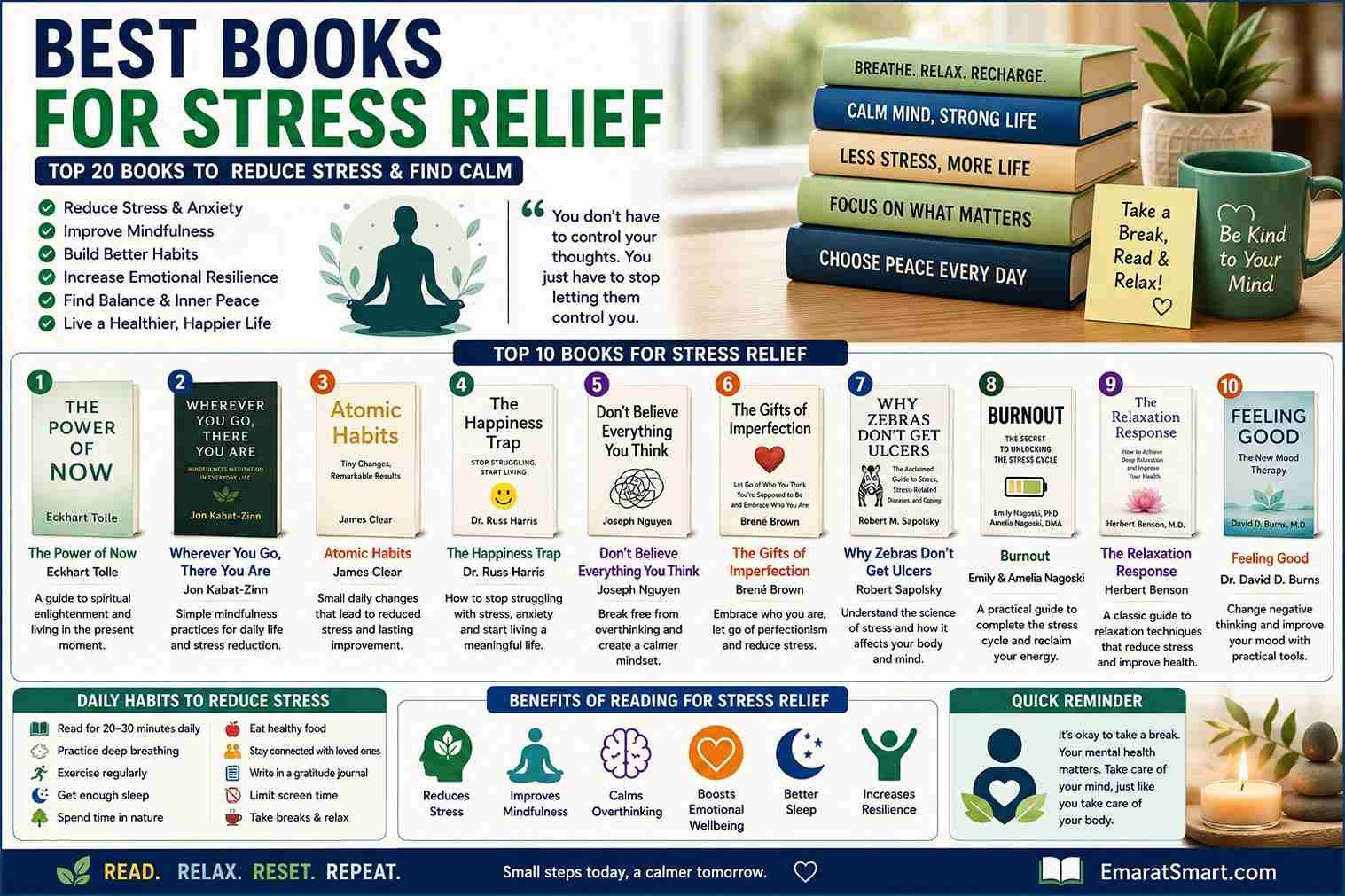
Quick Comparison of the Best Books for Stress Relief
| Book | Author | Best For | Difficulty |
|---|---|---|---|
| The Power of Now | Eckhart Tolle | Mindfulness | Beginner |
| Wherever You Go, There You Are | Jon Kabat-Zinn | Meditation | Beginner |
| Atomic Habits | James Clear | Healthy Habits | Beginner |
| The Happiness Trap | Dr. Russ Harris | Managing Stress | Beginner |
| Don’t Believe Everything You Think | Joseph Nguyen | Overthinking | Beginner |
| The Gifts of Imperfection | Brené Brown | Self-Acceptance | Beginner |
| Why Zebras Don’t Get Ulcers | Robert Sapolsky | Understanding Stress | Intermediate |
| Burnout | Emily Nagoski & Amelia Nagoski | Stress Recovery | Beginner |
Quick Tip: Reading for just 20 minutes before bedtime can help reduce stress, improve relaxation, and support better sleep. Pair your reading with a quiet environment and limit screen time for the best results.
Why Reading Helps Reduce Stress
Reading gives your mind a chance to slow down and focus on something positive and meaningful. It can help you step away from daily worries, improve emotional balance, and learn healthier ways to cope with challenges.
Benefits of reading for stress relief include:
- Reduces mental tension
- Improves focus and concentration
- Encourages relaxation
- Supports better sleep habits
- Increases emotional resilience
- Helps manage negative thoughts
- Promotes mindfulness
- Improves overall wellbeing
Even a short daily reading habit can have a positive impact on your mood and mental clarity.
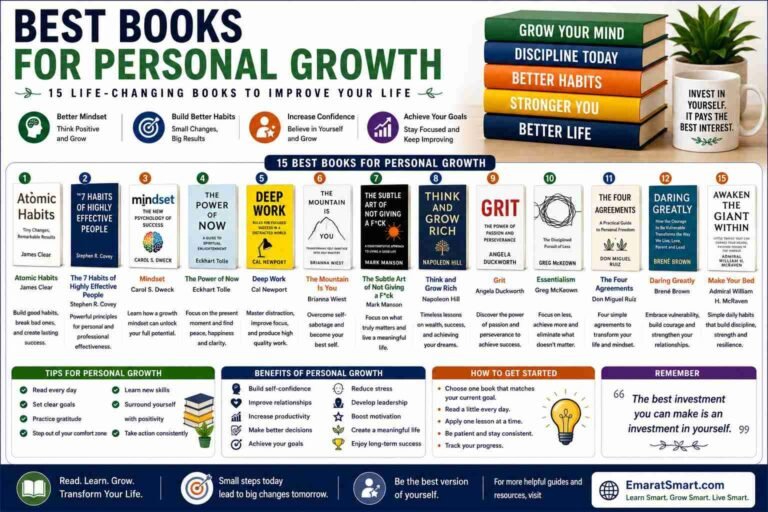
1. The Power of Now – Eckhart Tolle
This internationally bestselling book encourages readers to focus on the present moment instead of worrying about the past or future.
Why Read It?
- Learn mindfulness techniques
- Reduce overthinking
- Feel calmer during stressful situations
- Develop greater self-awareness
Best for: Anyone seeking a more peaceful and balanced mindset.
2. Wherever You Go, There You Are – Jon Kabat-Zinn
Written by a pioneer in mindfulness-based stress reduction, this book introduces simple meditation and mindfulness practices that can be incorporated into daily life.
Key Lessons
- Live in the present moment
- Practice mindful breathing
- Improve emotional awareness
- Reduce daily stress naturally
Its short chapters make it easy to read a few pages each day.
3. Atomic Habits – James Clear
Although primarily a book about habits, Atomic Habits shows how small, consistent changes can reduce stress by creating healthier routines and eliminating unnecessary friction in daily life.
You’ll Learn
- Build positive habits
- Break unhealthy routines
- Improve productivity
- Reduce decision fatigue
- Create lasting personal growth
4. The Happiness Trap – Dr. Russ Harris
Based on Acceptance and Commitment Therapy (ACT), this practical book teaches readers how to handle difficult thoughts and emotions without letting them control daily life.
Topics include:
- Managing anxiety
- Accepting emotions
- Reducing stress
- Living according to your values
- Building emotional flexibility
5. Don’t Believe Everything You Think – Joseph Nguyen
This easy-to-read book explores how overthinking contributes to stress and unhappiness. It encourages readers to question unhelpful thought patterns and develop a calmer, more balanced perspective.
Why It’s Popular
- Simple language
- Practical advice
- Helpful for reducing mental clutter
- Encourages healthier thinking habits
6. The Gifts of Imperfection – Brené Brown
This bestselling book encourages readers to let go of perfectionism and embrace self-acceptance. It offers practical advice on building resilience and reducing the pressure to be perfect.
Why Read It?
- Overcome perfectionism
- Build self-confidence
- Reduce emotional stress
- Develop healthier relationships
Best for: Anyone struggling with self-doubt or unrealistic expectations.
7. Why Zebras Don’t Get Ulcers – Robert Sapolsky
Written by a neuroscientist, this book explains how stress affects the body and mind. It combines scientific research with practical advice to help readers better understand and manage stress.
You’ll Learn
- How stress impacts physical health
- The science behind the stress response
- Healthy coping strategies
- Long-term stress management
Best for: Readers who want a science-based understanding of stress.
8. Burnout – Emily Nagoski & Amelia Nagoski
This book focuses on completing the body’s stress cycle instead of simply managing stressful situations. It provides practical strategies to recover from emotional exhaustion and prevent burnout.
Key Topics
- Emotional wellbeing
- Work-life balance
- Managing daily stress
- Building resilience
- Self-care practices
9. The Relaxation Response – Herbert Benson
A classic guide that introduces simple relaxation techniques backed by medical research. The author explains how regular relaxation exercises can reduce stress and improve overall health.
Benefits
- Lower stress levels
- Improve focus
- Support better sleep
- Promote calmness
- Easy daily exercises
10. Feeling Good – Dr. David D. Burns
This well-known book introduces cognitive behavioral techniques that help readers identify negative thought patterns and replace them with healthier ways of thinking.
Why It’s Helpful
- Reduce negative thinking
- Improve emotional wellbeing
- Build resilience
- Develop practical coping skills
How to Choose the Right Stress Relief Book
Choose a book based on your current needs.
| Your Goal | Recommended Book |
|---|---|
| Mindfulness | The Power of Now |
| Meditation | Wherever You Go, There You Are |
| Build Better Habits | Atomic Habits |
| Manage Anxiety | The Happiness Trap |
| Stop Overthinking | Don’t Believe Everything You Think |
| Self-Acceptance | The Gifts of Imperfection |
| Understand Stress | Why Zebras Don’t Get Ulcers |
| Recover from Burnout | Burnout |
Practical Ways to Reduce Stress Every Day
Reading works best when combined with healthy daily habits.
Try these simple strategies:
- Read for 20–30 minutes each day.
- Get enough sleep each night.
- Exercise regularly.
- Practice deep breathing or mindfulness.
- Limit unnecessary screen time.
- Spend time outdoors.
- Stay connected with family and friends.
- Keep a gratitude journal.
- Break large tasks into smaller steps.
- Maintain a balanced daily routine.
Common Mistakes When Managing Stress
Many people unintentionally increase their stress by:
- Ignoring signs of burnout.
- Skipping breaks during work or study.
- Spending too much time on social media.
- Trying to solve every problem at once.
- Neglecting sleep and exercise.
- Avoiding conversations about their feelings.
- Expecting immediate results from new habits.
Small, consistent changes are usually more effective than drastic lifestyle changes.
Benefits of Reading Stress Relief Books
Regularly reading books on stress management can help you:
- Feel calmer during difficult situations.
- Improve emotional resilience.
- Build healthier daily habits.
- Sleep better.
- Reduce overthinking.
- Improve focus and concentration.
- Strengthen mental wellbeing.
- Develop practical coping strategies.
Safety Note
Stress is a normal part of life, but ongoing or overwhelming stress shouldn’t be ignored. Self-help books can be valuable tools for learning healthy coping strategies, but they are not a substitute for professional care. If stress begins to significantly affect your daily life, work, relationships, or health, consider speaking with a qualified healthcare or mental health professional.
Official Resources
To learn more about stress management, mindfulness, and emotional wellbeing, explore these trusted resources:
- American Psychological Association (APA): https://www.apa.org/
- Mindful: https://www.mindful.org/
- Mental Health Foundation: https://www.mentalhealth.org.uk/
Recommended External Link: If you’re adding only one outbound link for SEO, use https://www.apa.org/ because it provides evidence-based information on stress, mental health, and healthy coping strategies.
Frequently Asked Questions
What are the best books for stress relief?
Some of the most recommended books include:
- The Power of Now by Eckhart Tolle
- Atomic Habits by James Clear
- The Happiness Trap by Dr. Russ Harris
- Burnout by Emily Nagoski & Amelia Nagoski
- Wherever You Go, There You Are by Jon Kabat-Zinn
- The Gifts of Imperfection by Brené Brown
- Feeling Good by Dr. David D. Burns
These books offer practical strategies for managing stress, improving emotional wellbeing, and building healthier daily habits.
Can reading really reduce stress?
Yes. Research suggests that reading can help people relax by shifting attention away from daily worries and encouraging mental focus. Reading for 20 to 30 minutes in a quiet environment may help reduce stress and improve overall wellbeing.
Which stress relief book is best for beginners?
For beginners, The Power of Now, Atomic Habits, and Don’t Believe Everything You Think are excellent choices because they use simple language and provide practical advice that can be applied immediately.
How much should I read each day?
Reading 20–30 minutes daily is a realistic goal. Even reading one chapter a day can help you build a consistent habit and gradually apply new ideas.
Are stress relief books a substitute for professional help?
No. These books are designed to support personal growth and teach coping strategies, but they are not a replacement for medical or mental health care. If stress becomes overwhelming or persistent, it’s important to seek advice from a qualified healthcare professional.
Which book is best for reducing overthinking?
Don’t Believe Everything You Think by Joseph Nguyen is widely recommended for understanding and reducing overthinking. It encourages readers to question unhelpful thought patterns and develop a calmer mindset.
Can students benefit from these books?
Absolutely. Students often face academic pressure, exams, and time management challenges. Stress relief books can help them develop healthier routines, improve focus, and build resilience.
What other habits can help reduce stress?
Along with reading, you can:
- Exercise regularly.
- Get enough sleep.
- Practice mindfulness or meditation.
- Eat a balanced diet.
- Stay connected with family and friends.
- Spend time outdoors.
- Limit excessive screen time.
- Maintain a consistent daily routine.
Conclusion
Reading the best books for stress relief can help you develop healthier habits, improve emotional resilience, and manage everyday challenges with greater confidence. Whether you want to practice mindfulness, reduce overthinking, improve sleep, or simply find moments of calm, the right book can provide practical guidance and lasting inspiration.
Remember that managing stress is an ongoing process, not a one-time solution. Start with one book that matches your current needs, apply its lessons consistently, and combine reading with healthy lifestyle habits such as regular exercise, quality sleep, and meaningful social connections.
Small daily improvements can make a significant difference over time. By investing in your mental wellbeing today, you can build a calmer, healthier, and more balanced future.
For more expert book recommendations, education guides, self-improvement resources, and practical learning articles, keep visiting EmaratSmart.com.