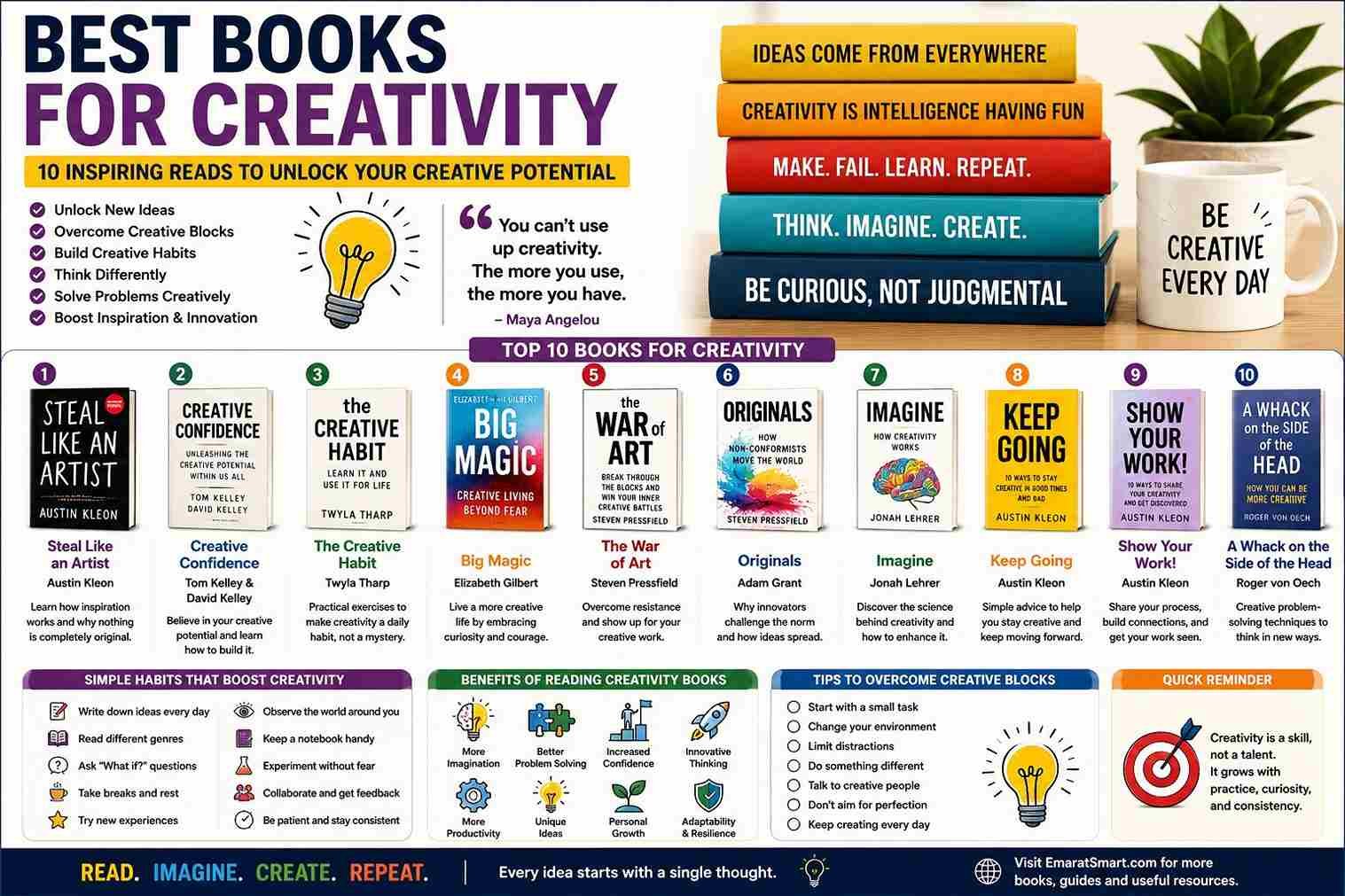
Best Books for Creativity: 10 Inspiring Reads to Unlock Your Creative Potential
Creativity isn’t limited to artists, writers, or designers. It’s a skill that helps you solve problems, generate new ideas, adapt to challenges, and think differently in everyday life. Whether you’re a student, entrepreneur, teacher, content creator, or professional, improving your creativity can help you become more innovative and productive.
One of the easiest ways to develop creative thinking is by reading books written by experienced creators, psychologists, designers, and innovators. The best books for creativity offer practical exercises, inspiring stories, and proven techniques that help you overcome creative blocks and build better ideas.
In this guide on EMARATSMART.COM, you’ll discover ten highly recommended creativity books, practical habits that encourage creative thinking, and tips you can start using today.
Quick Comparison
| Book | Best For | Difficulty |
|---|---|---|
| Steal Like an Artist | Everyday Creativity | Beginner |
| Creative Confidence | Building Confidence | Beginner |
| The Creative Habit | Daily Practice | Beginner |
| Big Magic | Overcoming Fear | Beginner |
| The War of Art | Creative Discipline | Intermediate |
| Originals | Innovation | Intermediate |
| Imagine | Understanding Creativity | Beginner |
| Keep Going | Staying Motivated | Beginner |
| Show Your Work! | Sharing Ideas | Beginner |
| A Whack on the Side of the Head | Creative Problem Solving | Beginner |
Quick Tip: Creativity grows through action. Try writing down one new idea every day, even if it seems small. Over time, this simple habit trains your brain to think more creatively.
Why Creativity Matters
Creative thinking helps you:
- Solve problems faster
- Generate fresh ideas
- Adapt to change
- Improve communication
- Become a better learner
- Innovate at work or school
- Increase confidence
- Find unique solutions
Creativity is a skill that can be developed with consistent practice.
1. Steal Like an Artist – Austin Kleon
One of the most recommended creativity books, it explains how inspiration comes from learning, observing, and building on existing ideas ethically.
You’ll learn:
- How creativity works
- Finding inspiration
- Building creative habits
- Developing your own style
2. Creative Confidence – Tom Kelley & David Kelley
Written by the founders of IDEO, this book teaches that everyone has creative potential and explains how to overcome self-doubt.
3. Big Magic – Elizabeth Gilbert
This inspiring book explores curiosity, courage, and the creative process while encouraging readers to stop waiting for perfect conditions before creating.
4. The Creative Habit – Twyla Tharp
A practical guide filled with daily exercises designed to make creativity part of your routine instead of something that happens by chance.
5. Originals – Adam Grant
Learn how innovative people challenge conventional thinking and turn unique ideas into successful projects.
6. The War of Art – Steven Pressfield
This book focuses on overcoming procrastination, fear, and resistance—the biggest obstacles to creative work.
7. Imagine – Jonah Lehrer
Explore the science behind creativity and discover how environment, collaboration, and experiences influence innovative thinking.
8. Keep Going – Austin Kleon
A motivating guide packed with simple advice for staying creative even when inspiration feels low.
9. Show Your Work! – Austin Kleon
Learn why sharing your creative journey can help you grow, receive feedback, and discover new opportunities.
10. A Whack on the Side of the Head – Roger von Oech
This classic book challenges conventional thinking with fun exercises that encourage fresh perspectives and creative problem-solving.
How to Choose the Right Creativity Book
Not every creativity book teaches the same skills. Choose one that matches your current goal.
| Your Goal | Recommended Book |
|---|---|
| Build Creative Habits | The Creative Habit |
| Overcome Creative Blocks | The War of Art |
| Think More Innovatively | Originals |
| Gain Confidence | Creative Confidence |
| Find Daily Inspiration | Big Magic |
| Learn Creative Thinking | Imagine |
| Improve Problem-Solving | A Whack on the Side of the Head |
| Stay Motivated | Keep Going |
| Share Your Creative Work | Show Your Work! |
| Spark New Ideas | Steal Like an Artist |
Simple Habits That Improve Creativity
Reading is just the beginning. Creativity grows when you practice it regularly.
Try these habits:
- Read for 20–30 minutes every day.
- Carry a notebook to capture ideas.
- Ask “What if?” questions.
- Learn a new skill or hobby.
- Spend time outdoors for fresh inspiration.
- Limit distractions during creative work.
- Experiment without worrying about perfection.
- Brainstorm multiple solutions before choosing one.
- Read books from different genres.
- Reflect on your ideas and improve them over time.
Common Creativity Mistakes
Many people believe they’re “not creative,” but creativity is a skill that develops with practice.
Avoid these common mistakes:
- Waiting for inspiration before starting.
- Comparing your work to others.
- Being afraid of making mistakes.
- Giving up after one failed idea.
- Consuming too much content without creating.
- Trying to make everything perfect.
- Ignoring feedback.
- Following the same routine every day.
Progress comes from experimenting, learning, and improving—not from being perfect.
Benefits of Reading Creativity Books
The right books can help you:
- Think more creatively.
- Solve problems more effectively.
- Build confidence in your ideas.
- Develop innovative thinking.
- Improve writing and communication.
- Become more adaptable.
- Increase productivity.
- Stay motivated during creative projects.
- Generate original ideas more consistently.
- Grow personally and professionally.
Creativity Exercises You Can Try Today
You don’t need special tools to become more creative. Try these simple exercises:
- Write down 10 new ideas on any topic.
- Read one chapter from a creativity book and apply one lesson.
- Sketch or mind-map a solution to a problem.
- Rearrange your workspace for a fresh perspective.
- Challenge yourself to find three different solutions to the same problem.
- Keep an “idea journal” and review it every week.
- Spend 15 minutes creating something just for fun.
Small daily exercises often lead to significant creative growth over time.
Safety Note
Creativity develops differently for everyone. Avoid comparing your progress with others or expecting perfect results immediately. Focus on learning, experimenting, and enjoying the creative process. If you’re feeling overwhelmed or burned out, take breaks and return with a fresh perspective.
Official Resources
To explore creativity, innovation, and creative thinking further, these trusted resources are excellent starting points:
- IDEO Design Thinking: https://designthinking.ideo.com/
- Adobe Create: https://create.adobe.com/
- Creative Bloq: https://www.creativebloq.com/
Recommended External Link: If you’re adding only one outbound link for SEO, use https://designthinking.ideo.com/ because it offers practical resources on creativity, innovation, and problem-solving from one of the world’s leading design and innovation companies.
Frequently Asked Questions
What are the best books for creativity?
Some of the most recommended books include:
- Steal Like an Artist by Austin Kleon
- Creative Confidence by Tom Kelley & David Kelley
- Big Magic by Elizabeth Gilbert
- The Creative Habit by Twyla Tharp
- Originals by Adam Grant
- The War of Art by Steven Pressfield
- Imagine by Jonah Lehrer
- Show Your Work! by Austin Kleon
These books help readers build creative habits, overcome creative blocks, and develop innovative thinking.
Which creativity book is best for beginners?
Steal Like an Artist is one of the best books for beginners because it uses simple language, practical advice, and short chapters that are easy to apply.
Can creativity be learned?
Yes. Research and experience show that creativity is a skill that can be developed through practice, curiosity, learning, and experimentation. Everyone can improve their creative thinking with consistent effort.
How can I become more creative every day?
Simple daily habits include:
- Reading regularly.
- Writing down new ideas.
- Learning new skills.
- Asking thoughtful questions.
- Exploring different perspectives.
- Solving puzzles or brain teasers.
- Practicing creative hobbies.
Consistency is more important than waiting for inspiration.
Which book helps overcome creative blocks?
The War of Art by Steven Pressfield is widely recommended for overcoming procrastination, fear, self-doubt, and other obstacles that can prevent creative work.
Are creativity books useful for students?
Absolutely. Creativity helps students solve problems, think critically, complete projects, improve writing, and develop innovative ideas across many subjects.
How often should I read creativity books?
Reading 20 to 30 minutes a day is a good goal. More importantly, apply what you learn through small creative projects and daily practice.
Do creative people always have new ideas?
No. Even highly creative people experience periods where ideas are harder to find. The difference is that they continue practicing, experimenting, and learning instead of waiting for inspiration.
Conclusion
Reading the best books for creativity is one of the most effective ways to develop innovative thinking, solve problems more effectively, and build lasting creative habits. Whether you’re a student, entrepreneur, professional, writer, or artist, these books provide practical strategies to help you generate ideas and approach challenges with confidence.
Remember that creativity isn’t a talent reserved for a few people—it’s a skill that grows with curiosity, practice, and persistence. Start with one book that matches your goals, apply one lesson at a time, and make creativity part of your daily routine.
Small creative habits practiced consistently can lead to remarkable ideas and long-term personal and professional growth.
For more expert book recommendations, education guides, technology resources, and self-improvement articles, keep visiting EmaratSmart.com.