
Peptide Therapy at Home: Understanding the Growing Shift Toward Personalized Healthcare
Healthcare is becoming increasingly personalized. Instead of relying entirely on a traditional clinic-based model, patients today have access to a wider range of healthcare options that can fit around their routines. This includes preventive care, virtual consultations, home visits, and selected treatments delivered outside conventional medical settings.
Among the areas attracting growing attention is peptide therapy. Peptides are naturally occurring chains of amino acids that have different roles in the body, and researchers have been studying their potential applications in several areas of medicine. As interest continues to grow, some patients are also exploring peptide therapy at home as a more convenient way to access selected treatments under professional medical supervision.
However, convenience should not be confused with self-treatment. Peptide-based therapies can vary considerably, and their suitability depends on an individual’s health, medical history, and the specific treatment being considered.
Why Personalized Healthcare Is Becoming More Popular
People are living increasingly busy lives. Work, family responsibilities, travel, and other commitments can make regular healthcare appointments difficult to manage.
At the same time, patients are becoming more interested in healthcare that considers their individual circumstances. Rather than simply asking, “What treatment is available for this condition?” many people now want to know which approach is appropriate for their particular needs.
Personalized healthcare takes factors such as medical history, lifestyle, symptoms, existing conditions, and treatment goals into consideration.
This approach does not necessarily involve advanced therapies. Sometimes personalization simply means that a doctor takes the time to understand the patient before making a recommendation.
Understanding Peptide Therapy
Peptides are short chains of amino acids that act in different ways within the body. Some naturally occurring peptides are involved in biological signaling and other physiological processes.
Certain peptide-based medicines have established medical applications, while other peptide treatments remain areas of ongoing research.
This distinction is important because online information about peptides can sometimes combine established medical uses with experimental approaches and broad wellness claims.
Anyone considering peptide therapy should therefore look beyond social media discussions and promotional material. A healthcare professional can help explain what is known about a particular treatment, what evidence supports its use, and whether it is appropriate for the individual.
Why Medical Assessment Comes First
Before starting any medical treatment, a proper assessment is important.
A healthcare professional may review a patient’s medical history, current medications, allergies, existing conditions, and other relevant information. Depending on the treatment, additional testing may also be appropriate.
This process helps identify potential risks and ensures that the proposed treatment has a reasonable medical basis.
It also gives patients an opportunity to ask questions.
For example, they may want to know what a treatment is intended to achieve, how it is administered, how frequently it may be used, and what side effects or precautions should be considered.
The Appeal of Healthcare at Home
The interest in home healthcare is not limited to peptide-based treatments.
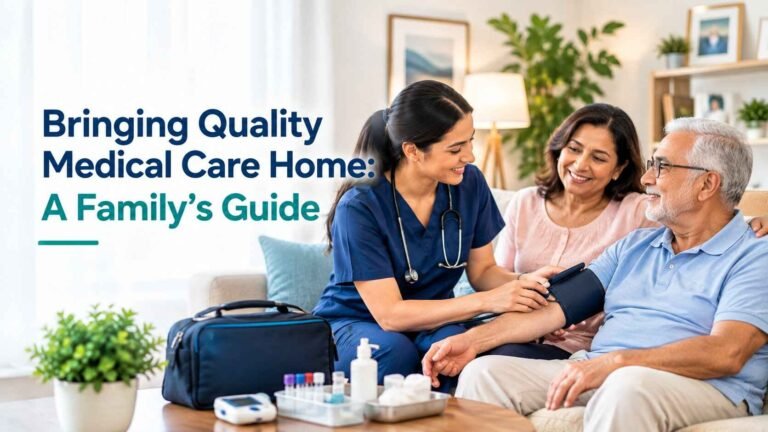
Across Dubai and other major cities, patients are increasingly interested in receiving certain medical services without travelling to a clinic. Home consultations, laboratory sample collection, nursing services, and selected treatments can all make healthcare more convenient when the patient’s condition allows it.
For many people, the biggest benefit is simply saving time.
A home appointment can eliminate the need to drive through traffic, find parking, sit in a waiting room, and travel back home.
For families, the convenience can be even more noticeable.
Healthcare for Children Is Different
Children require healthcare that takes their age and development into account.
A child’s symptoms may also change quickly, and parents may not always know whether something can be monitored at home or requires professional attention.
In suitable non-emergency situations, having a pediatrician at home can provide parents with an opportunity to have their child assessed in a familiar environment.
A home consultation may be useful for common concerns such as fever, cough, mild infections, stomach complaints, or follow-up care. A pediatric professional can assess the child’s condition and advise parents about appropriate next steps.
However, home consultations should never delay emergency treatment. Severe breathing difficulties, loss of consciousness, seizures, serious injuries, or other potentially life-threatening symptoms require urgent medical attention.
Making Medical Care More Comfortable
A familiar environment can make healthcare less stressful for some patients.
Children may feel more relaxed at home than in an unfamiliar medical facility. Older adults may also appreciate avoiding unnecessary travel.
Home consultations can give families more privacy and may make it easier for parents to discuss concerns about a child’s health.
The quality of care, however, depends on the healthcare professional and the clinical process rather than simply the location.
A home visit should still involve appropriate assessment, documentation, hygiene, communication, and follow-up.
Technology Is Supporting Home Healthcare
Digital technology has made home-based healthcare easier to organize.
Patients can request appointments online, communicate basic information before a visit, and receive instructions or follow-up information digitally.
For providers, technology can help coordinate healthcare professionals and appointments across different parts of a city.
This does not mean that healthcare becomes entirely digital. Physical assessment and professional judgment remain important for many medical concerns.
Technology simply reduces some of the logistical barriers between patients and healthcare providers.
Patients Need Better Information, Not Just More Information
The internet has made health information widely available, but more information does not always mean better information.
Patients can find articles, social media posts, testimonials, advertisements, and research papers within minutes. The challenge is understanding which information is reliable and relevant.
This is especially important with newer or less familiar treatments.
A responsible healthcare decision should be based on appropriate medical advice and credible evidence rather than a single online testimonial.
Patients should also be comfortable asking a healthcare professional to explain unfamiliar terminology or claims.
What Patients Should Ask Before Treatment
Before agreeing to a treatment, patients can ask several practical questions:
- What is the purpose of the treatment?
- Why has it been recommended for me?
- Are there alternative options?
- What are the possible risks?
- Are there any medications or conditions that could affect its use?
- What follow-up will be required?
- What should I do if I experience unexpected symptoms?
These questions can help turn a treatment decision into a proper conversation between the patient and healthcare professional.
Convenience Should Support, Not Replace, Medical Care
One of the most useful developments in modern healthcare is the ability to make selected services more accessible.
But convenience should never become the main reason for choosing a particular treatment.
A service may be easy to book, but that does not automatically mean it is medically appropriate.
The best approach is to start with the patient’s needs and then determine whether home-based care is suitable.
The Future of Personalized Healthcare
The healthcare system of the future is unlikely to depend on a single model.
Hospitals will continue to be essential for emergencies and complex medical conditions. Clinics will remain important for specialist consultations, procedures, and investigations.
At the same time, home healthcare can provide an additional option for selected services.
Personalized treatments, home consultations, digital healthcare, and preventive services may increasingly work together to create a more flexible healthcare experience.
For patients, the important thing is having access to reliable information and qualified professionals who can help determine what is appropriate.
Healthcare may be changing where and how services are delivered, but the fundamentals remain the same: proper assessment, evidence-based care, patient safety, and clear communication.
That combination can make modern healthcare more convenient without losing sight of what matters most—the individual receiving the care.